


Real Boat Owners Speak: How Inflatable Fenders Protect 65ft+ Yachts and 100,000 lbs Trawlers (Plus Valve Quick-Fix Tip!)
When protecting a multi-ton investment against rough concrete docks, 20-knot winds, or narrow lock systems, boat owners cannot afford fender failure. Traditional heavy rubber or Polyform buoys are bulky, heavy, and difficult to store—leading more captains each year to switch to commercial-grade heavy-duty inflatable fenders.
Don't just take our word for it. Here is what three real yacht captains and trawler owners shared about their real-world experiences using our inflatable marine fenders under extreme marine conditions.
1. "Protected My 100,000 lbs Trawler" & The Valve Adjustment Pro-Tip
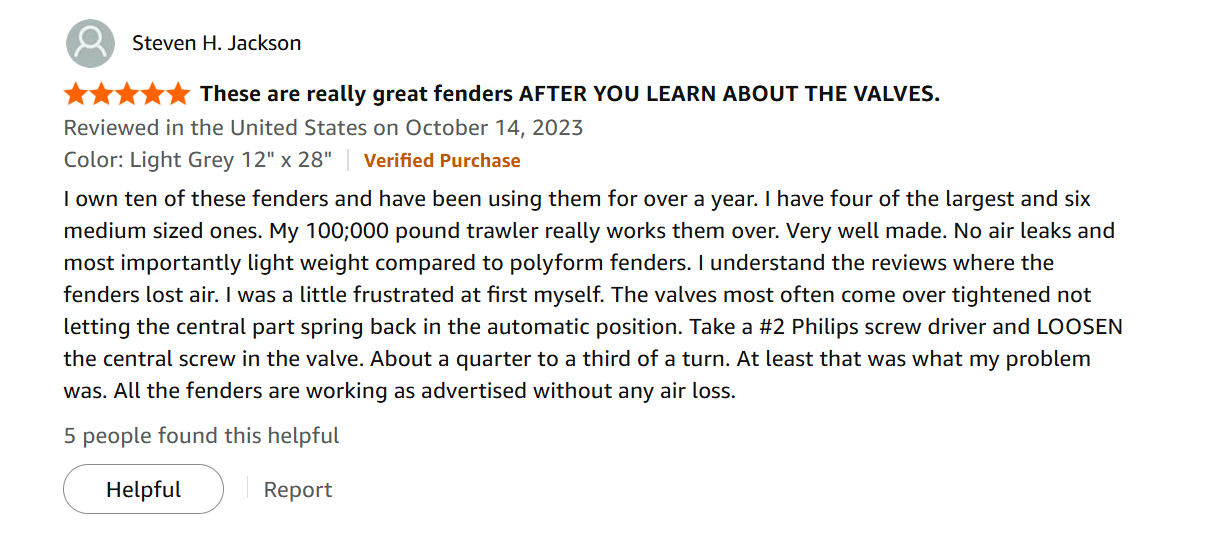
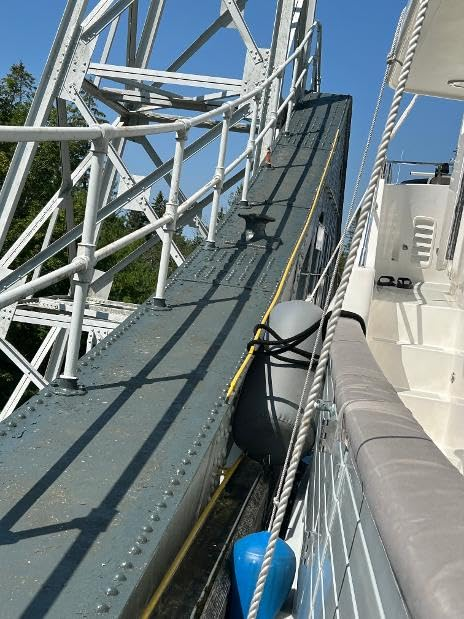
Captain Steven H. Jacksonrelies on a fleet of 10 Inflatable Fenders (both 12"x28" and larger sizes) to protect his massive 100,000-pound trawler. While praising their lightweight design compared to heavy Polyform fenders, he shared a crucial operational tip that solves the #1 common misconception regarding inflatable fender valves:
"My 100,000 pound trawler really works them over. Very well made. No air leaks and most importantly light weight compared to polyform fenders... The valves most often come over tightened not letting the central part spring back in the automatic position. Take a #2 Philips screw driver and LOOSEN the central screw in the valve. About a quarter to a third of a turn... All the fenders are working as advertised without any air loss."
🔧 Quick Maintenance Tech Tip:
If your fender seems to lose air right after inflation, the central valve stem may simply be tightened down too hard from the factory. Using a #2 Phillips screwdriver to back off the central screw by 1/4 to 1/3 turn lets the internal spring snap shut automatically when you remove the pump nozzle!
2. Inflatable Fenders vs. A4 Buoys on a 65ft Yacht
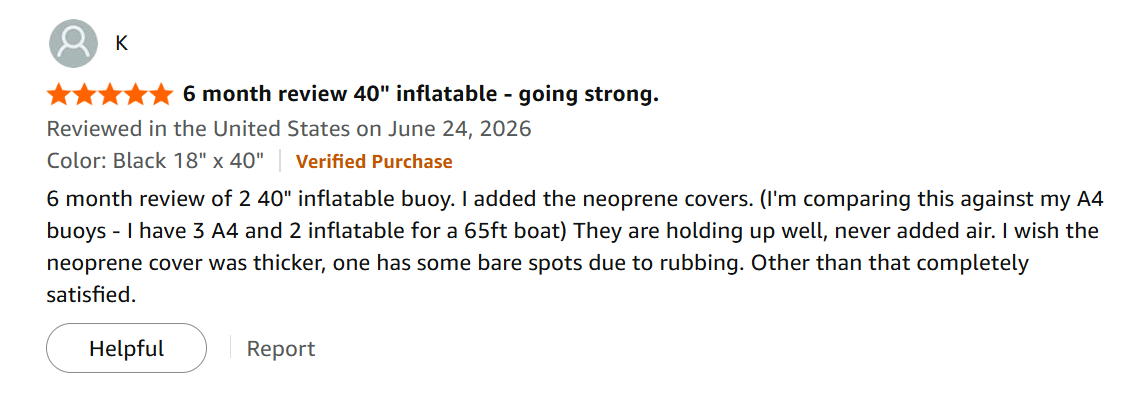
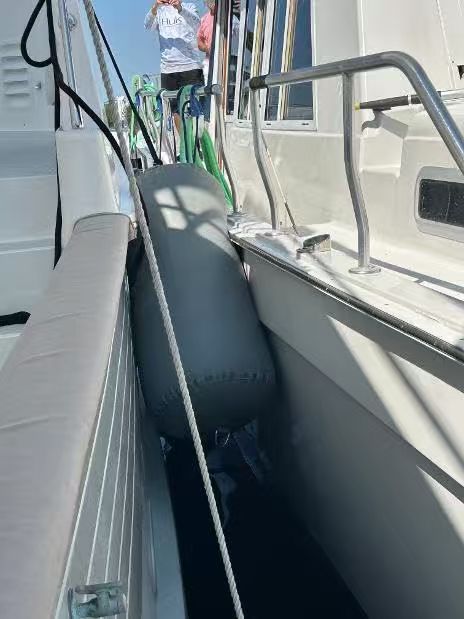
For large motor yachts, hull standoff distance is critical. Boat owner K tested two 18" x 40" inflatable buoys alongside standard A4 fenders on a 65-foot boat over a 6-month continuous trial:
"6 month review of 2 40" inflatable buoy... (I'm comparing this against my A4 buoys - I have 3 A4 and 2 inflatable for a 65ft boat). They are holding up well, never added air... completely satisfied."
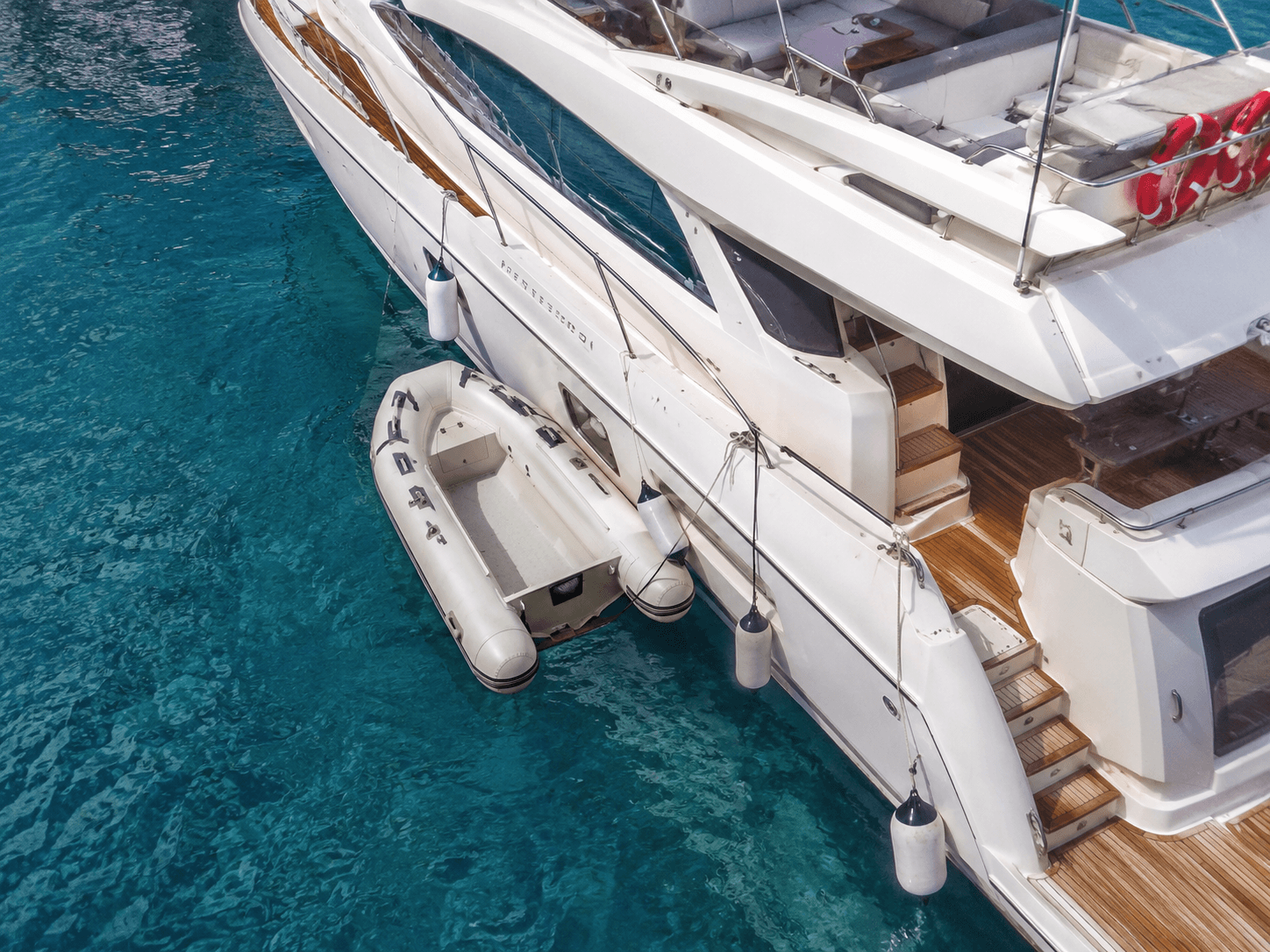
Compared to heavy rigid buoys that clutter valuable deck space, heavy-duty inflatable fenders deliver equal or superior cushion while deflating compactly into boat lockers when underway.
3. Real-World ICW Docking: 20-Knot Winds & Rough Concrete Piers
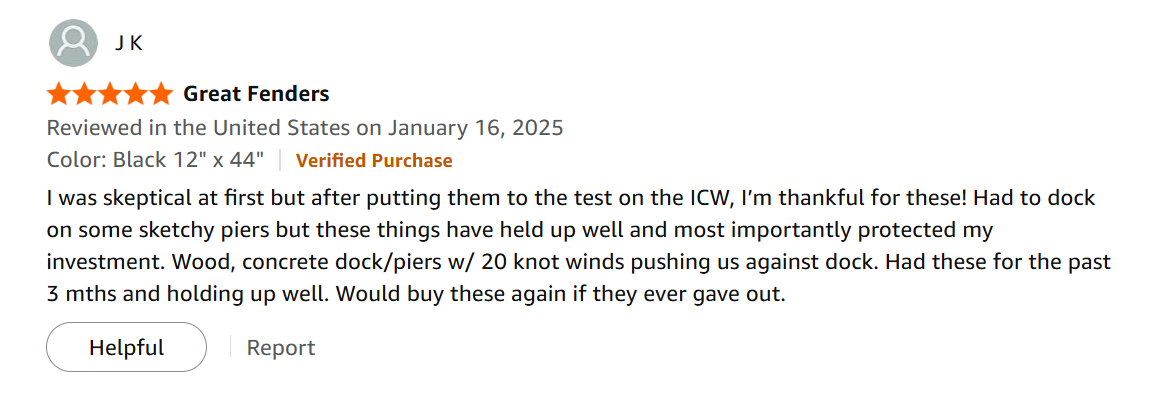
Cruising the Intracoastal Waterway (ICW) means facing unpredictable tide shifts and rough timber or concrete pilings. Captain JK put our 12" x 44" fenders to the ultimate test during demanding coastal docking scenarios:
"I was skeptical at first but after putting them to the test on the ICW, I'm thankful for these! Had to dock on some sketchy piers but these things have held up well and most importantly protected my investment. Wood, concrete dock/piers w/ 20 knot winds pushing us against dock... Would buy these again."
Why Yacht Captains are Upgrading to Heavy-Duty Inflatables
| Feature | Traditional Molded Rubber Fenders | ILIFE Heavy-Duty Inflatable Fenders |
|---|---|---|
| Weight & Handling | Heavy, difficult to store and deploy solo. | Ultra-lightweight high-tensile PVC/Hypalon; easy to move. |
| Storage Footprint | Takes up massive foredeck or locker volume. | Deflates completely to a fraction of its operational size. |
| Load Capacity | Can mark gelcoat under high friction. | Engineered to absorb impacts for 65ft+ vessels and 100,000 lbs hulls. |
Equip Your Yacht with Proven Protection
Ready to upgrade your vessel's docking setup with lightweight, high-strength protection? Explore our wide range of heavy-duty inflatable marine fenders today.
Shop Commercial Inflatable Marine FendersThank you to Captain Steven, K, and JK for sharing their real-world experience and helping the boating community navigate safer!