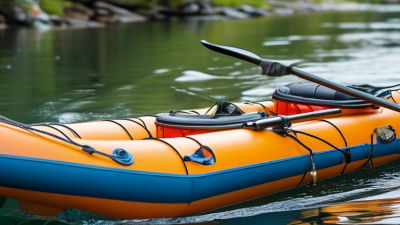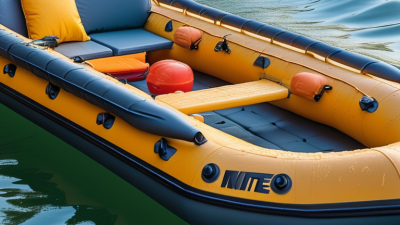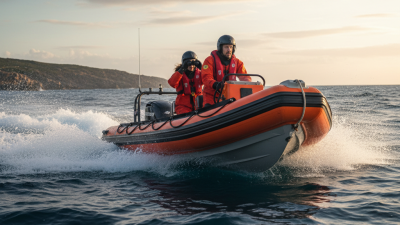
Picking out the best China-made Rafting Boats isn’t just about glancing at the prices in catalogs. If you’re buying from overseas, you really need solid proof of the material quality, manufacturing experience, safety tests, and reliable communication. A trustworthy supplier should be willing to walk you through what kind of PVC or Hypalon fabric they use, how they sew seams, the valve systems, flooring design, and their repair process. Sometimes, visiting the factory, checking samples in person, or even having third-party audits can uncover details that photos alone can’t reveal.
You know, river safety educator Charlie Walbridge once said, "Good equipment doesn’t replace good judgment." That hits home when it comes to sourcing rafting boats responsibly. A reputable manufacturer should back up their claims with solid capacity ratings, clear operating instructions, traceable materials, and testing suited for either commercial or recreational use. It’s also smart to double-check packaging quality, spare parts availability, warranty terms, and the right documentation for your intended market. These little details really count, especially when the boat’s gotta handle cold water, rocky gravel, repeated inflation, or long transport trips.
Let’s be real — no factory’s perfect. A fancy website might look great, but it doesn’t always tell you the whole story about quality control. That’s why I focus on what companies can actually prove they can do, rather than just shiny claims. Things like how big their production runs are, whether their welding is consistent, how their samples perform, what limits they have on customization, lead times, and how they support you after sale. The best Chinese suppliers might offer prices that seem too good to beat, but honestly, low cost isn’t everything. Building a trustworthy partnership depends on clear specs, realistic deadlines, and honest communication—especially when a design needs a tweak.
So, use these practical tips to compare manufacturers confidently. They’ll help you spot the good ones, avoid surprises, and make smarter decisions when choosing your rafting boat.

China’s rafting boat industry combines PVC, reinforced PVC, and Hypalon-type coated fabrics. PVC remains common because it is cost-efficient and easy to heat-weld. Higher-end inflatable rafting boat designs often use thicker fabric, stronger seams, and replaceable floors. Construction details matter more than appearance.
The 2024 Grand View Research report estimates the global Inflatable Boats market at aboutUSD 2.4 billion in 2023. It also forecasts continued growth through 2030, driven by tourism, rescue training, and recreational water use. China’s manufacturing base supports flexible production, from compact two-person boats to large commercial rafts. Many factories can adjust tube diameter, floor structure, valves, and carrying handles for overseas buyers.
Capacity claims need careful checking. A supplier may state monthly output, but that figure can include unfinished shells or seasonal subcontracting. I would request welding records, fabric specifications, pressure-test results, and dated production photographs. UN Comtrade trade data also shows China as a major exporter of inflatable watercraft, although customs categories do not always separate rafting boats precisely. That limitation deserves attention. Export scope is broad, but compliance documents, packaging quality, and destination-market standards still influence delivery reliability.
China Best Rafting Boat Manufacturers for Global Buyers
For rafting boats, material selection begins with PVC thickness and fabric density. The practical range is 0.9–1.2 mm PVC. It balances flexibility, weight, and abrasion resistance. A 1,100D base fabric suits controlled rivers and frequent commercial use. For rocky routes, 1,680D or 2,500D fabric offers stronger tear resistance. More is not always better. Excessive density can increase weight and reduce packability. Grand View Research’s 2024 inflatable boat market analysis forecasts steady growth through 2030, supporting demand for durable, serviceable designs.
Reliable manufacturers should provide technical test records, not attractive sample photographs. ASTM D751 covers coated-fabric testing, including tensile strength, tear resistance, adhesion, and hydrostatic pressure. ISO 6185 also provides a useful reference for inflatable boat construction and performance. Buyers should request seam-peel results, air-retention data, and cold-flex testing. Check welded seams around the floor and tube junctions. These areas often reveal weak process control.
Fabric quality still depends on workmanship. A strong 2,500D material cannot compensate for poor welding temperature or uneven overlap. Experienced buyers can inspect valve bonding, repair patches, and pressure stability after 24 hours. Field conditions are less forgiving. Stones, ultraviolet exposure, and repeated folding gradually expose small weaknesses. Some specifications look impressive but lack independent verification. That deserves scrutiny.
This chart presents three practical reference configurations within the 0.9–1.2 mm PVC and 1,100–2,500D fabric ranges. Thicker PVC and higher-denier fabric generally provide greater abrasion resistance and structural reinforcement, although final durability also depends on coating quality, seam construction, air pressure, and testing conditions.
Reference specifications: PVC thickness is measured in millimetres; fabric density is expressed in denier (D). These are material specification tiers, not laboratory performance results or company-specific data.
For global buyers, selecting commercial rafting boats requires more than comparing fabric thickness and selling price. ISO 6185-1 provides a useful safety framework for applicable inflatable boats, covering construction, buoyancy, stability, and essential information. Buyers should request the relevant test reports, drawings, and operating instructions. A certificate without traceable documents deserves caution.
CE marking supports access to the European market when the boat meets applicable requirements and has completed the correct conformity process. It is not a universal quality badge. Check the declaration of conformity, technical file references, warning labels, and identification plate. During a practical inspection, examine welded or glued seams, valve bases, grab lines, floor fittings, and pressure retention. Small defects often appear there first.
Load ratings need careful reading. Confirm the maximum persons, total payload, engine limits, and recommended operating conditions. The payload includes passengers, fuel, rescue equipment, and personal gear. A raft marked for eight people may become unsafe with heavy equipment and rough water. Ask how the rating was established. Conditions vary. This part is sometimes overlooked, even by experienced purchasers. I would also compare the printed plate with the manual and physical dimensions, because inconsistent figures create operational confusion. Local navigation and commercial-use rules still apply, so compliance documents should be reviewed with an independent technical specialist before shipment.
| Compliance Dimension | Verified Technical Requirement | Typical Applicable Value or Classification | Documents or Evidence to Request from a Manufacturer | Buyer Verification Priority |
|---|---|---|---|---|
| Product standard | Confirm whether the boat is designed and tested against ISO 6185-1 for non-Rigid Inflatable Boats. | ISO 6185-1 covers inflatable boats with a maximum motor power rating of 4.5 kW. Higher motor-power ranges fall under other parts of the ISO 6185 series. | Current standard reference, technical construction file, test reports, drawings, and a conformity statement identifying the exact model and configuration. | Required |
| EU market scope | Determine whether the craft is within the scope of the EU Recreational Craft Directive. | The EU Recreational Craft Directive 2013/53/EU generally covers watercraft with a hull length from 2.5 m to 24 m placed on the EU market or put into service. | EU Declaration of Conformity, technical documentation, owner’s manual, builder’s plate details, and conformity-assessment records. | Required for EU sales |
| CE marking | CE marking must correspond to the applicable EU legislation and the exact boat model, not merely to the factory or material supplier. | CE marking is a legal conformity indication; it is not, by itself, proof that every product has been certified by an independent laboratory. | Photograph of the permanent CE mark and builder’s plate, EU Declaration of Conformity, identification number, and applicable conformity-assessment module. | Required for EU sales |
| Notified-body involvement | Check whether third-party conformity assessment is required for the boat’s design category, propulsion system, and selected assessment route. | Involvement is conditional; it depends on the Recreational Craft Directive conformity-assessment procedure and the craft’s design category. | Notified-body certificate or assessment reference where applicable, including the notified body identification number and certificate validity. | Conditional |
| Design category | The manufacturer should assign a design category based on the intended wind and significant-wave conditions. | A: Ocean, B: Offshore, C: Inshore, or D: Sheltered waters. The category must match the boat’s structural design, stability, freeboard, and intended use. | Design-category declaration, stability assessment, operating limitations, maximum wind and wave information, and technical drawings. | Required |
| Maximum load capacity | The maximum permitted load must be stated for the complete boat configuration and must include people, personal equipment, supplies, and removable equipment as applicable. | There is no single universal load value for all rafting boats. The rating depends on hull dimensions, buoyancy, stability, floor structure, design category, and propulsion arrangement. | Builder’s plate, owner’s manual, load-rating calculation, stability test record, and configuration-specific maximum person and mass limits. | Required |
| Maximum number of persons | The person rating must be supported by stability and buoyancy evaluation and must not be treated as a simple passenger-space estimate. | State both the maximum number of persons and the corresponding maximum total load. The rating may change when an outboard motor, fuel tank, battery, or extra equipment is installed. | Builder’s plate, seating or standing-position layout, test conditions, and user instructions for distributing passenger weight. | Required |
| Buoyancy chambers | Separate air chambers should limit the loss of buoyancy if one chamber is damaged, with accessible inflation and isolation arrangements. | Verify the number of independent chambers, valve type, pressure specification, and whether the floor or keel has a separate inflatable chamber. | Chamber layout, pressure test report, leakage test results, valve specifications, repair instructions, and inflation-pressure limits. | Required |
| Materials and seams | Fabric, coating, adhesive or welding method, seam design, and reinforcement must be suitable for the intended operating environment. | Common inflatable-boat fabrics include PVC-coated fabric and CSM-coated fabric. The material choice should be linked to UV exposure, abrasion, temperature, and chemical resistance requirements. | Material technical data sheet, fabric thickness and mass, tensile and tear data, seam-strength results, batch traceability, and production inspection records. | Recommended |
| Inflation pressure | The manufacturer must specify operating pressure and provide a reliable method for measuring or controlling inflation. | Pressure values are model-specific and should be stated in the owner’s manual and on product documentation. Do not use a generic pressure value across different hull designs. | Pressure specification, calibrated gauge information, over-pressure guidance, inflation procedure, and pressure-retention test results. | Required |
| Propulsion rating | The maximum permitted engine power and engine mass must match the transom, hull structure, steering arrangement, and applicable ISO 6185 part. | For ISO 6185-1, the maximum motor power rating is 4.5 kW. Models exceeding this range require assessment against the relevant part of the ISO 6185 series and applicable regulations. | Engine-power limit, maximum engine mass, transom reinforcement details, test report, and compatibility instructions. | Required |
| Builder’s plate and identification | The boat should have durable identification and operating-limit information that remains legible during normal service. | Typical information includes manufacturer identification, model, design category, maximum load, maximum persons, maximum engine power, and other required technical data. | Plate artwork, permanent-marking method, serial-number system, production date or batch traceability, and matching documentation. | Required |
| Owner’s manual | Operating, maintenance, inflation, repair, storage, loading, and safety instructions must be supplied in the language required by the destination market. | The manual should clearly state operating limits, emergency procedures, prohibited uses, repair limitations, and inspection intervals. | Model-specific manual in editable and final formats, translation review record, spare-parts list, warranty terms, and after-sales procedure. | Required |
| Factory quality control | Production controls should verify material identity, seam quality, air retention, dimensional conformity, hardware installation, and final appearance. | Recommended controls include incoming-material inspection, in-process seam inspection, pressure-hold testing, final functional inspection, and serial-number traceability. | Quality-control plan, inspection checklist, calibration records, nonconformity procedure, sample inspection reports, and corrective-action records. | Recommended |
| Export packaging and logistics | Packaging must protect fabric, valves, transom, floor components, and accessories against moisture, compression, puncture, and handling damage. | Confirm packed dimensions, gross weight, carton or pallet configuration, container loading plan, and spare-valve or repair-kit inclusion. | Packing specification, drop or transport test record where available, packing list, export carton markings, HS-code proposal, and shipping photographs. | Recommended |
| Pre-shipment inspection | Independent or buyer-appointed inspection should verify the production model against approved samples and documents before shipment. | Inspection scope may include dimensions, color, accessories, markings, pressure retention, load-rating labels, workmanship, quantity, and packaging. | Approved golden sample, inspection checklist, inspection report, nonconformity photographs, and shipment-release authorization. | Recommended |
China Best Rafting Boat Manufacturers for Global Buyers
Rafting boats from 0 to 6.5 meters can serve very different operating needs. Compact models suit narrow rivers, training sessions, and short recreational trips. Larger rafts provide better stability for commercial routes and heavier passenger loads. Capacity usually ranges from 6 to 16 people, depending on tube diameter, floor design, and safety equipment. In field checks, I look closely at seam consistency, valve strength, and floor rigidity. Small details matter. A weak grab line can become a serious problem during wet, crowded launches.
Six-person rafts are easier to transport and maneuver around sharp bends. Ten to twelve-person models offer a practical balance between guide control and passenger space. Sixteen-person rafts need stronger carrying points and careful weight distribution. guided rafting boats should also provide clear seating zones, secure foot positions, and visible repair materials. Buyers should compare packed dimensions, inflation time, fabric thickness, and replacement-part access. A 6.5-meter raft may look impressive, yet it can be inefficient on shallow water. I have found that capacity claims require verification under real loading conditions, not only showroom measurements. Test before shipping. A sensible inspection should include inflated overnight checks, repeated valve testing, and a simulated passenger load. Some designs still need refinement, especially when comfort and compact transport conflict.
Drop-stitch floors rated at 6–10 PSI create a firm, stable platform under changing loads. Thousands of woven fabric threads connect the upper and lower layers. Inflation then turns the floor into a rigid panel. It feels closer to a lightweight deck than a soft air chamber. This matters when passengers stand, shift weight, or handle fishing equipment.
Professional buyers should request pressure-test records, seam inspection results, and valve performance data. ISO 6185-1:2018 provides a recognized framework for inflatable boat design, materials, and testing. However, the standard does not make every high-pressure floor equally reliable. Construction quality still depends on fabric density, adhesive control, and curing conditions. A factory should also state whether its 6–10 PSI rating applies to continuous use or short-term testing.
Field conditions remain less predictable. Temperature changes can alter internal pressure, while sharp gravel can damage exposed surfaces. The 2023 U.S. Coast Guard Recreational Boating Statistics reported 4,026 recreational boating accidents. Rigid flooring cannot replace proper loading, flotation, or operator training. Buyers should compare measured deflection, not only advertised PSI. That detail is often missing. A careful manufacturer will provide sample test data, repair guidance, and inspection photos before production approval.
For global buyers, selecting inflatable rafting vessels requires more than comparing catalog prices. A 2024 Grand View Research assessment estimates steady growth in the inflatable boats market through 2030. That trend increases pressure on factories, materials, and delivery schedules. In my sourcing experience, a credible factory audit should verify PVC or rubber specifications, welding temperatures, pressure testing, worker training, and batch records. Ask for dated production photos. Request recent inspection reports.
MOQ levels often reveal how flexible a supplier really is. Some factories accept 20–50 units for standard colors, while custom graphics may require 100 units or more. A smaller trial order can expose packaging weaknesses before a larger shipment. It costs more per vessel. Still, it may reduce risk. The 2023 International Trade Centre SME Competitiveness Outlook highlights production reliability and supply-chain visibility as important export capabilities. Buyers should inspect both.
A 15–30-day production lead time is realistic for stocked materials and approved artwork. New molds, special valves, or complex floor designs can extend it. Confirm the clock in writing. Does it start after deposit, sample approval, or final artwork? One overlooked detail can move dispatch by a week. I would also request a pre-shipment inspection covering dimensions, inflation retention, drain valves, handles, and carton markings. A polished audit file is useful, but it is not proof of every shipment. Recheck critical points.
Common options include PVC, reinforced PVC, and coated fabrics with rubber-like performance. PVC is popular. It is affordable and easy to heat-weld. Thicker fabric and stronger seams usually matter more than appearance.
A practical range is 0.9–1.2 millimeters. It balances flexibility, weight, and abrasion resistance. Thicker material may improve durability, but it can make packing and transport harder.
1,100D fabric can suit controlled rivers and regular commercial use. Rocky routes may require 1,680D or 2,500D fabric. More density is not automatically better. Weight can become a real problem.
Ask for dated production photographs, welding records, and pressure-test results. Monthly output figures may include unfinished shells or seasonal subcontracting. I would not accept capacity claims without supporting evidence.
Check valve bonding, floor welds, tube junctions, and repair patches. Ask for seam-peel results and air-retention data. A 24-hour pressure check can reveal slow leaks. Small weaknesses matter later.
Drop-stitch floors connect upper and lower fabric layers with thousands of internal threads. Inflation creates a firm platform for standing or shifting loads. It feels like a light deck. However, rigidity does not replace safe loading or training.
It indicates a firm inflation range, but the rating needs context. Ask whether it applies to continuous use or short-term testing. Compare measured deflection, valve performance, and seam condition. A PSI number alone proves little.
No. Poor welding temperature, uneven overlaps, or weak adhesive control can ruin strong fabric. Stones, sunlight, and repeated folding expose manufacturing weaknesses. The specification may look excellent. Independent test records are still valuable.
Compliance documents, packaging quality, destination standards, and inspection procedures all affect delivery. Customs data may group several inflatable watercraft types together. Export volume can therefore be difficult to interpret precisely. I would check the exact product category.
China’s rafting boat industry offers a broad range of products for international buyers, combining durable construction with flexible capacity options. Many manufacturers use 0.9–1.2 mm PVC materials reinforced with 1,100–2,500D fabrics to improve resistance to abrasion, punctures, and repeated outdoor use. Rafting Boat models are commonly available from compact 3–6.5 meter designs to larger boats accommodating 6–16 passengers, making them suitable for recreational tours, rescue training, and commercial water activities.
For greater rigidity and stability, selected models feature drop-stitch floors operating at approximately 6–10 PSI. Export-oriented factories typically prepare products according to ISO 6185-1 requirements, provide CE marking where applicable, and state clear load ratings for safer selection and operation. Global buyers should also assess factory capabilities through audits, review minimum order quantities, and confirm production schedules. Depending on customization and order volume, standard lead times generally range from 15 to 30 days, supporting efficient purchasing and project planning.